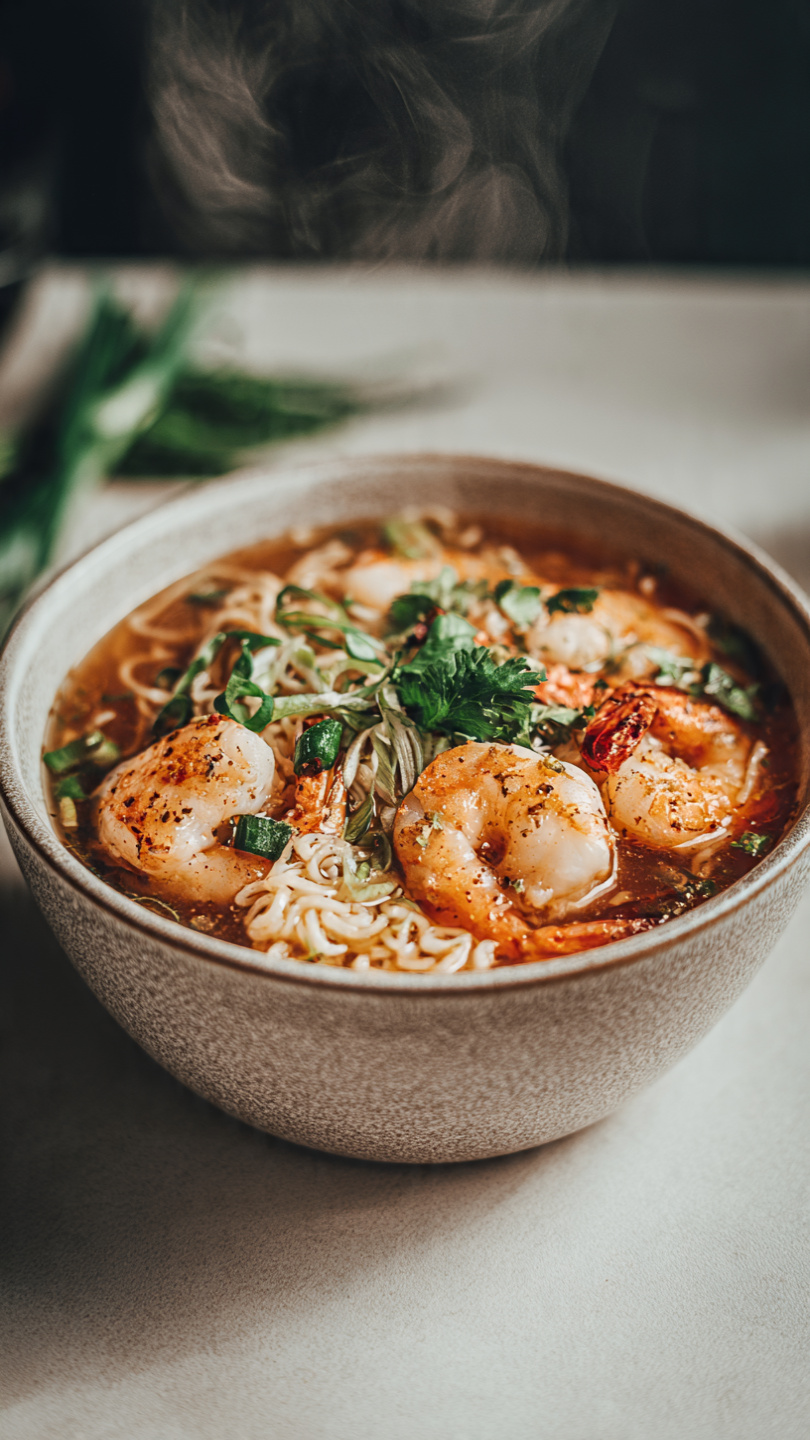
Loaded Shrimp Ramen Soup
This Loaded Shrimp Ramen Soup is a rich, deeply flavored bowl packed with tender shrimp, springy noodles, and a savory broth that comes together in just 30 minutes.

The Ramen Bowl You Will Want on Repeat
There is something deeply satisfying about a bowl of ramen that you made yourself from scratch. Not the five-minute dorm-room version, but a genuinely loaded bowl with a silky, flavor-packed broth, plump juicy shrimp, springy noodles, and toppings piled high. This Loaded Shrimp Ramen Soup delivers exactly that, and the best part is it comes together in about 30 minutes on a weeknight.
This recipe sits at the intersection of all the best shrimp ramen recipes you have ever craved. The broth is built on a base of toasted garlic, fresh ginger, savory miso paste, and chili garlic sauce, which gives it that unmistakable depth you expect from a great ramen soup. It is the kind of Asian soup that makes you lean over the bowl just to breathe it in before the first bite.
Getting the broth right is everything in a great ramen dinner, and having the right pantry staples on hand makes it so much easier. A quality toasted sesame oil, white miso paste, and a good chili garlic sauce like Sambal Oelek are the backbone of this recipe and worth keeping stocked.
Why This Shrimp Ramen Works So Well
A lot of shrimp soup recipes fall short in one of two ways: either the broth tastes thin and one-dimensional, or the shrimp end up rubbery and overcooked. This recipe solves both problems.
The broth technique here borrows from traditional ramen soup recipes by building layers of flavor before the liquid even goes in. Sauteing the aromatics first, then blooming them in oil, then dissolving miso paste separately before stirring it in, creates a broth that tastes like it simmered for hours even though it did not.
Shrimp, on the other hand, cook in just 2 to 3 minutes. Adding them last, right before serving, keeps them tender and sweet every single time.
Chef's Tip: Never boil the broth after adding the miso paste. High heat can destroy the delicate fermented flavor. Keep it at a gentle simmer once the miso goes in.
What Goes Into a Loaded Shrimp Ramen Bowl
Let's talk about what makes this a loaded bowl rather than a basic one. Each component earns its place:
- Shrimp: Large shrimp give you the best bite and visual impact. Peeled and deveined saves time, but leave the tails on for a more dramatic presentation if you like.
- Miso paste: White or yellow miso adds umami richness without overpowering the broth. It is the secret weapon in most great shrimp ramen recipes.
- Shiitake mushrooms: Their earthy, meaty texture adds body and complements the sweetness of the shrimp beautifully.
- Bok choy: It wilts just enough in the hot broth while staying slightly crisp, adding color and freshness.
- Soft-boiled eggs: The jammy yolk that bleeds into the broth when you break it open is one of the great pleasures of ramen. Do not skip them.
- Corn, nori, and sesame seeds: These toppings add pops of sweetness, umami, and crunch that make every bite a little different from the last.
Together these components turn a simple ramen noodle recipe into a restaurant-quality bowl you will come back to week after week.
Tips for the Best Shrimp Ramen at Home
A few small details separate a great bowl from a good one:
Cook the noodles separately. Always boil ramen noodles in their own pot of water. Cooking them directly in the broth makes the broth starchy and the noodles mushy.
Season as you go. Taste the broth before adding the shrimp and adjust with a little more soy sauce, miso, or chili sauce to hit your ideal balance of salty, savory, and spicy.
Do not crowd the pot with shrimp. If your shrimp are packed in too tightly, they steam rather than poach and you lose that clean, snappy texture.
Serve immediately. Ramen waits for no one. Have your bowls warmed and all your toppings prepped and ready before the shrimp go into the pot.
Pro Tip: Warm your serving bowls by filling them with hot water for a minute before ladling in the soup. A warm bowl keeps your ramen hot longer.
Ready to make the most satisfying bowl of shrimp ramen soup you have ever had? Here is everything you need:
Loaded Shrimp Ramen Soup
This Loaded Shrimp Ramen Soup is a rich, deeply flavored bowl packed with tender shrimp, springy noodles, and a savory broth that comes together in just 30 minutes.
Ingredients
- 1 lb large shrimp, peeled and deveined, tails on or off
- 4 ramen noodles, dried blocks, seasoning packets discarded
- 6 cups chicken broth, low-sodium preferred
- 1 tbsp sesame oil, toasted
- 3 tbsp soy sauce, low-sodium
- 2 tbsp miso paste, white or yellow miso
- 4 garlic cloves, minced
- 1 tbsp fresh ginger, grated or finely minced
- 1 tbsp chili garlic sauce, adjust to taste, such as Sambal Oelek
- 2 bok choy, halved or quartered lengthwise
- 6 oz shiitake mushrooms, stems removed, caps thinly sliced
- 4 green onions, thinly sliced, whites and greens separated
- 4 large eggs, soft-boiled and halved, for topping
- 1 tbsp vegetable oil, neutral flavored
- 1 cup corn, canned or thawed frozen
- 4 nori sheets, small sheets, for topping, optional
- 1 tsp sesame seeds, toasted, for garnish
Instruction
Soft-boil the eggs: Bring a small pot of water to a boil. Gently lower in the eggs and cook for exactly 6 to 7 minutes. Transfer immediately to an ice bath for 5 minutes, then peel and set aside.
Heat the vegetable oil in a large pot or Dutch oven over medium-high heat. Add the white parts of the green onions, garlic, and ginger. Stir and cook for 1 to 2 minutes until very fragrant.
Add the sliced shiitake mushrooms and cook for 3 to 4 minutes, stirring occasionally, until they begin to soften and turn golden at the edges.
Pour in the chicken broth, soy sauce, and chili garlic sauce. Bring the broth to a steady simmer over medium heat.
In a small bowl, whisk the miso paste with a ladleful of the hot broth until fully dissolved, then stir it back into the pot. This keeps the miso smooth and prevents it from clumping.
Add the bok choy and corn to the simmering broth. Cook for 2 to 3 minutes until the bok choy is just tender and still bright green.
Add the shrimp to the pot. Cook for 2 to 3 minutes, stirring gently, just until the shrimp are pink, curled, and opaque throughout. Do not overcook.
While the shrimp cooks, prepare the ramen noodles in a separate pot according to package directions. Drain well and drizzle with a small splash of sesame oil to prevent sticking.
Divide the noodles evenly among four large bowls. Ladle the hot shrimp and vegetable broth generously over the noodles.
Top each bowl with a halved soft-boiled egg, sliced green onion tops, sesame seeds, and a sheet of nori. Drizzle the remaining sesame oil over everything and serve immediately.
Equipment
- Large pot or Dutch oven
- Medium saucepan (for noodles)
- Small saucepan (for eggs)
- Ice bath bowl
- Fine mesh strainer or ladle
- Chef's knife and cutting board
- Box grater or microplane (for ginger)
- Large serving bowls
Notes
Serving Ideas and Variations
This ramen dinner is a full meal on its own, but a few sides and swaps can make it feel completely different bowl to bowl:
- Make it spicier: Swirl in a teaspoon of chili oil right before serving or add a few sliced fresh Thai chilies to the broth.
- Go lighter: Swap the chicken broth for a dashi broth made with kombu and bonito flakes for a more delicate, traditional Japanese flavor.
- Add more vegetables: Sliced snap peas, shredded carrots, or baby spinach all wilt beautifully into the hot broth right at the end.
- Switch the protein: This broth works incredibly well with sliced poached chicken, pan-seared salmon, or crispy baked tofu if you want to mix things up.
Pair your shrimp ramen with a simple cucumber salad dressed with rice vinegar and sesame oil on the side for a complete, restaurant-style Asian soup spread at home.
Storing and Reheating
If you are lucky enough to have leftovers, store the broth and shrimp in one container and the noodles in a separate one. The noodles will absorb the broth if stored together and lose their great texture by the next day.
Reheat the broth gently on the stovetop over medium-low heat, then add the shrimp just to warm through. Cook a fresh batch of noodles and you have an almost-instant second bowl that tastes just as good as the first.